
Travel guide
San Andrés island tour: the ultimate guide to mastering the ‘Mulita’ and escaping the ordinary
Exploria · Updated November 4, 2026 · 10 min read
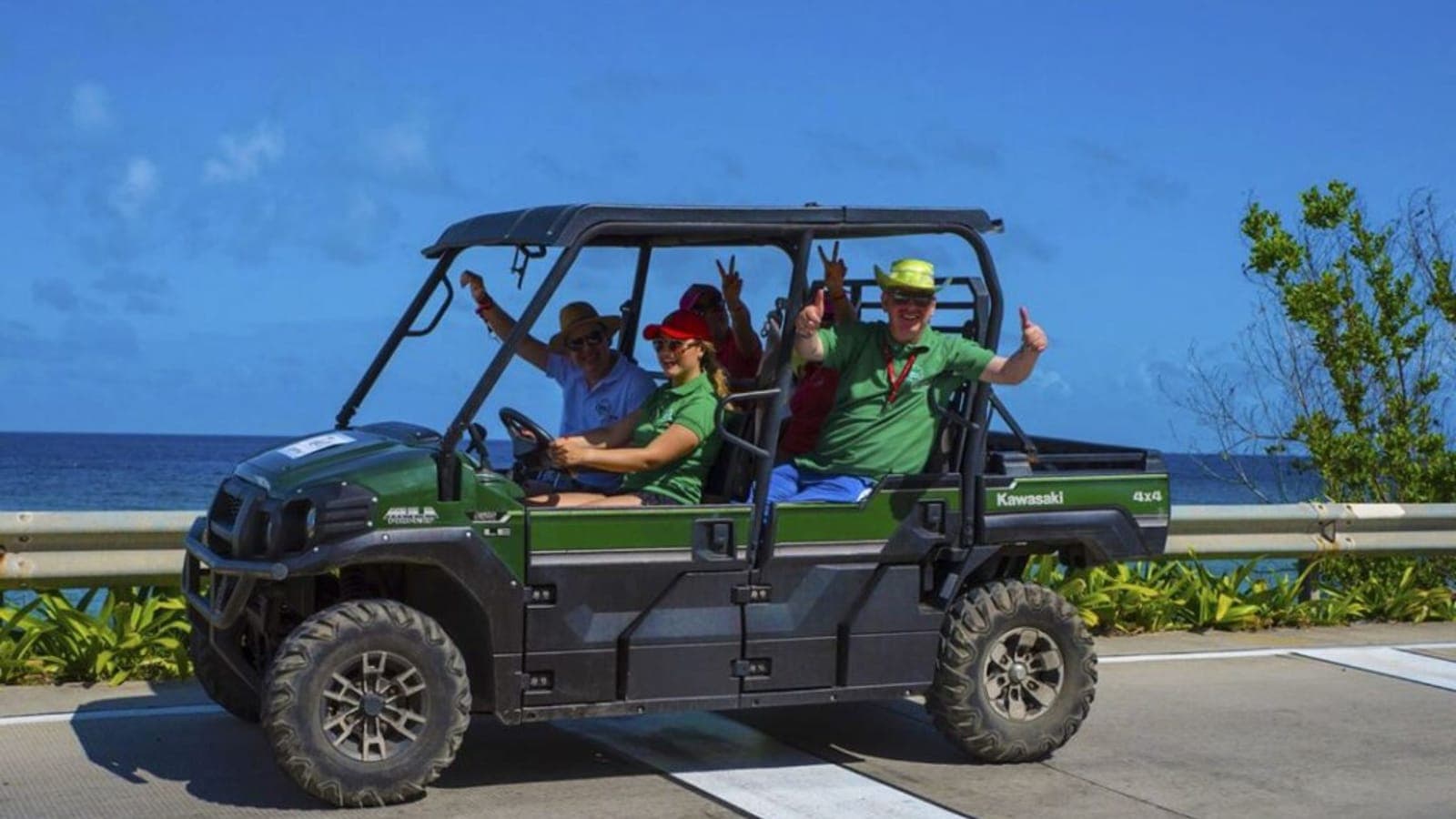
There’s an exact, almost magical moment when you arrive in San Andrés. It’s that instant when you finally escape the vibrant chaos of downtown, leave behind the perfume shops and the motorcycle traffic buzzing like a swarm of bees, and take the ring road. Right there, the noise disappears and is replaced by the sound of the wind beating against the canvas roof and the roar of an engine begging for adventure.
If you’re reading this, it’s because you’re not the kind of traveler who settles for seeing the island through the window of an air-conditioned bus, waiting for the guide to tell you when to get off and when to get back on. You want to be in control. You want to feel the salty breeze hitting your face, the Caribbean sun tanning your left arm and the freedom to stop wherever you please.
That’s why a San Andrés island tour aboard a Mulita isn’t just a tourist activity; it’s a rite of passage. But heads up: even though the island looks small on a map of San Andrés, it has its tricks, its potholes and its secrets. As a traveler who has driven these 30 kilometers of asphalt hundreds of times, I’m going to tell you the truth: the good, the bad and what nobody tells you about driving in this paradise.
Why a Mulita and not a taxi?
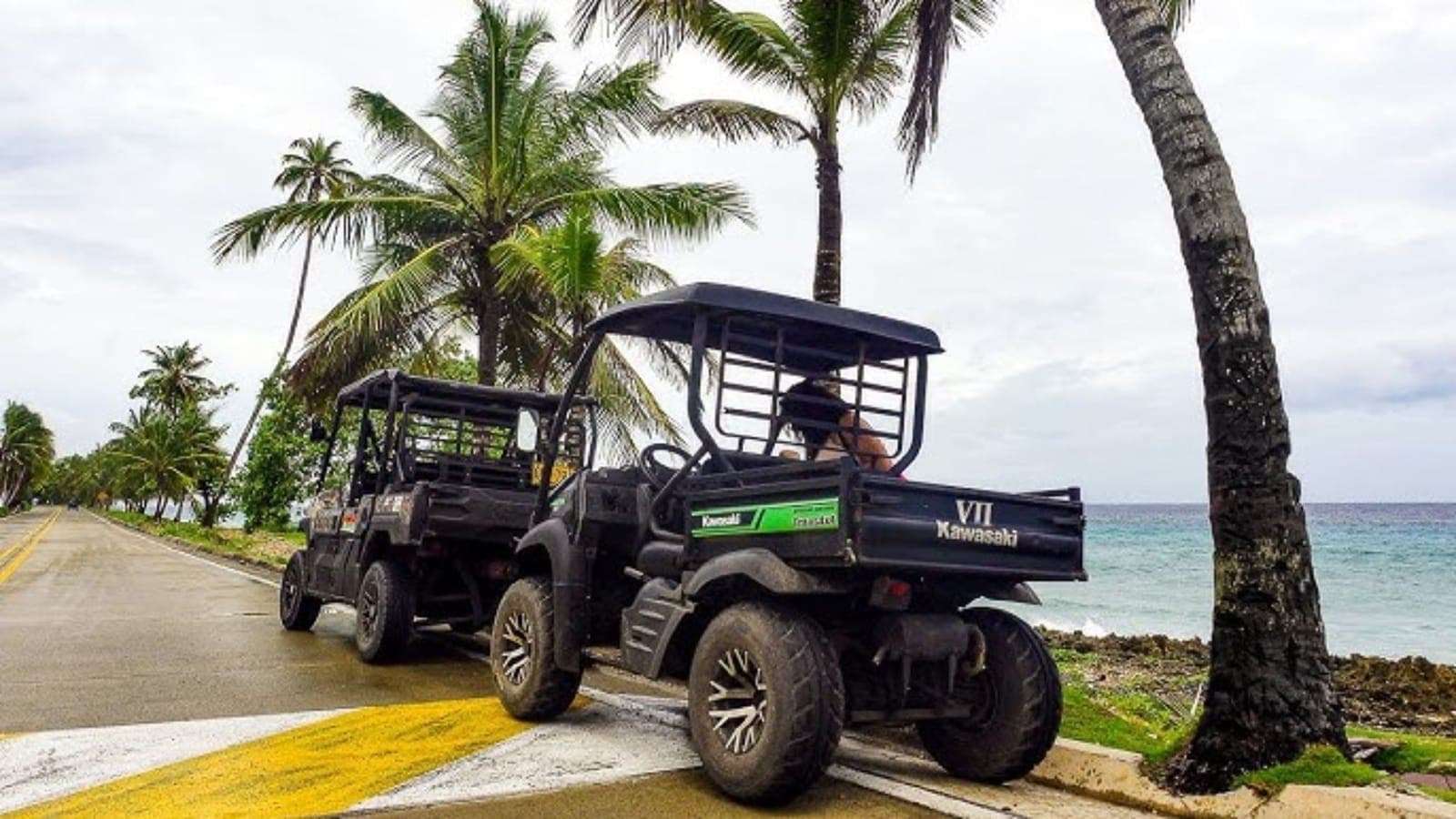
First, let’s get our terms straight. In San Andrés, you’ll see all sorts of things rolling down the streets. But mule rental in San Andrés has almost completely replaced the traditional electric golf cart.
The reason is simple: power and range.
Sure, the golf cart is romantic and quiet, but San Andrés isn’t completely flat. When you want to head up to “La Loma” (the island’s inhabited heart) or need a little muscle to pass someone, the golf cart is going to fall short, and trust me, you don’t want to get stuck halfway up a hill with the thermometer at 30 °C.
The Mulita (though these days we use the name for any similar utility vehicle) is a sturdy 4×4, usually gas-powered. It’s not a luxury vehicle: it’s noisy, it vibrates, the steering is sometimes stiff and it’s not very fast. But that’s exactly where its charm lies.
- Total freedom: You don’t depend on schedules. If you fall in love with a beach in San Luis, you stay three hours. If you don’t like a spot, you’re gone in five minutes.
- Natural ventilation: There are no windows here. The air conditioning is the Caribbean breeze.
- Capacity: They’re perfect for families or groups of friends, since they usually seat 2 to 6 people comfortably.
Compared with a taxi, the Mulita works out much cheaper if you plan on making multiple stops. A taxi will charge you for every leg, or a steep fee to wait for you. The Mulita is yours for the day (usually from 9:00 AM to 5:00 PM or 6:00 PM).
The ideal route: understanding the map of San Andrés
The island is shaped like a seahorse, and the main road runs almost all the way around it. Most tourists make the mistake of leaving downtown and turning right (heading west). My professional advice: plan around your departure time.
If you head out early (9:00 AM), go east (toward San Luis). If you head out late, go west to catch the sunset. Let’s assume you’re an early riser and want to make the most of the whole day.
Leg 1: the east side and the magic of San Luis
As soon as you leave the shopping district and take the road toward the airport and beyond, the concrete cityscape changes dramatically. You’re entering San Luis.
This is where the Raizal people live. The concrete houses disappear and give way to traditional architecture: wood painted in bright colors, wide porches and gabled roofs. Slow down. Life moves slowly here. The first thing you’ll notice is the music. It’s not nightclub reggaeton; it’s classic reggae, calypso or soca pouring out of huge speakers (“picós”) on the terraces or at the little beach kiosks.
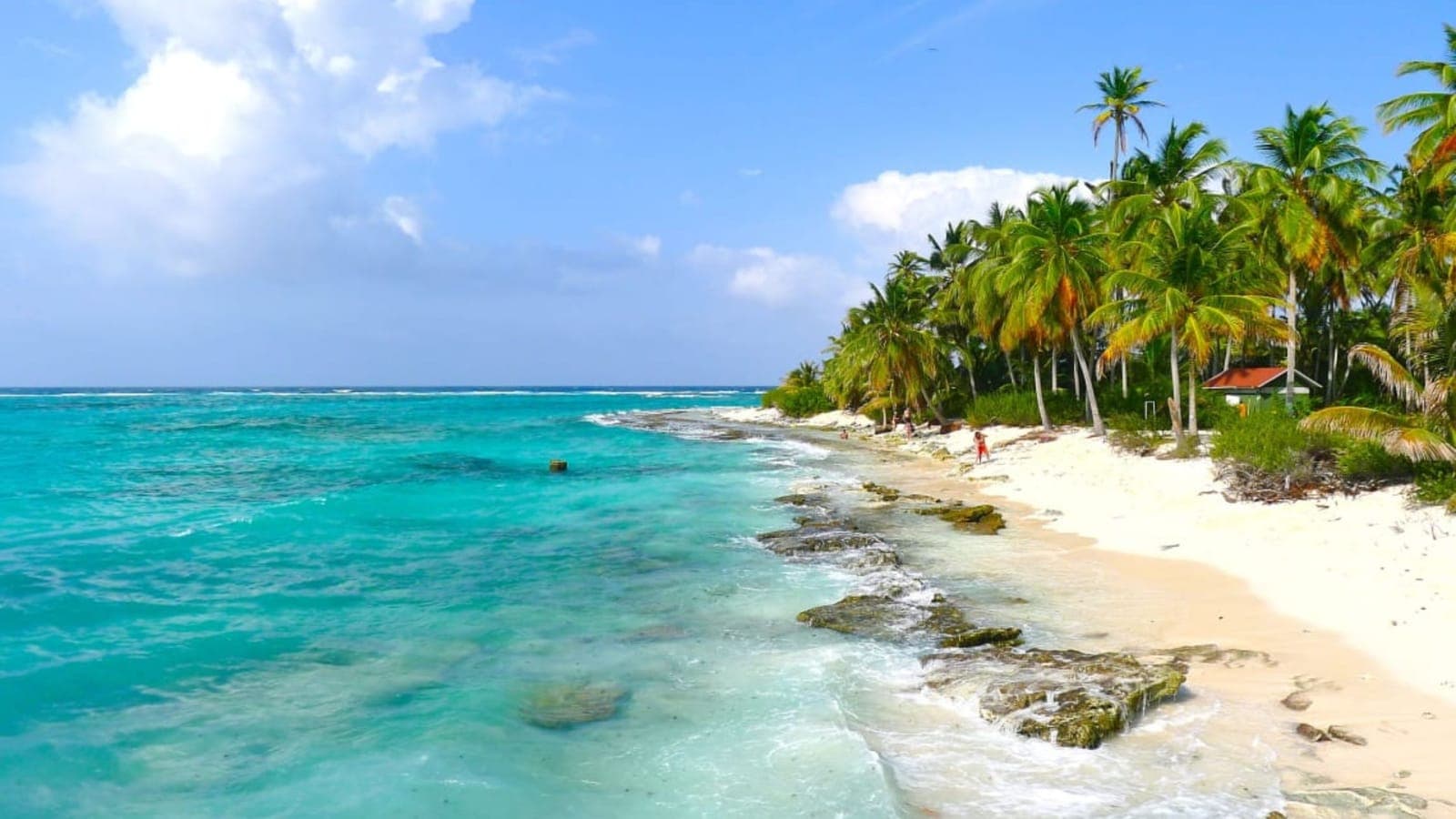
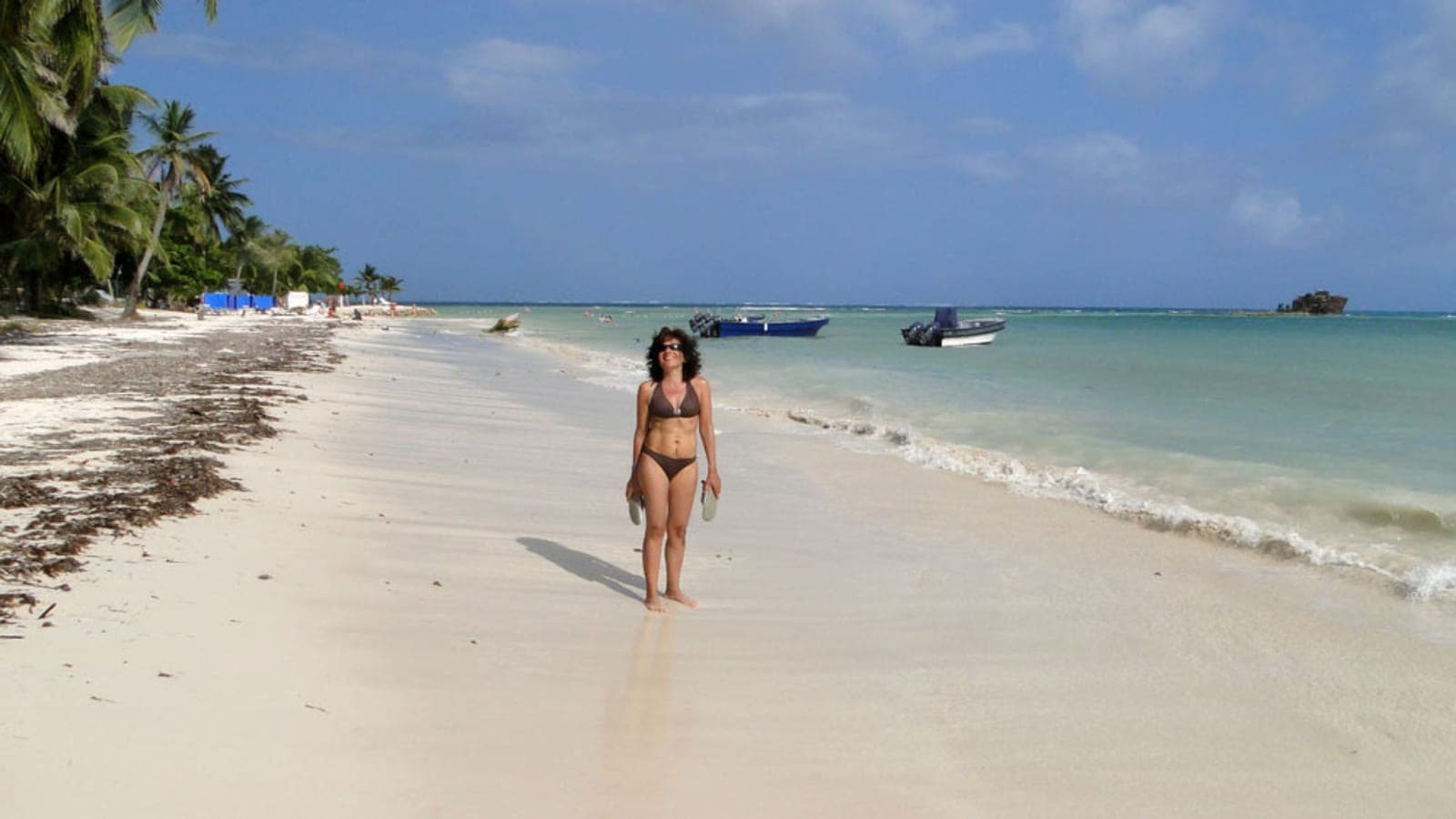
If you’re looking for peace and quiet, the best beaches in San Andrés are here. Unlike Spratt Bight downtown, in San Luis the sand is looser and the surf a little livelier.
- Recommended stop: Rocky Cay beach. Park the Mule (always in visible spots or proper parking lots; never leave it alone in the middle of nowhere). You can walk out to the cay if the tide is low. The water here has shades of turquoise that look Photoshopped, but they’re real.
Leg 2: the southern tip and the Hoyo Soplador
Following the road, you’ll reach the southern tip of the island. Here the traffic thins out and the road feels lonelier. It’s the perfect moment to test the Mule’s power and enjoy the scenery.
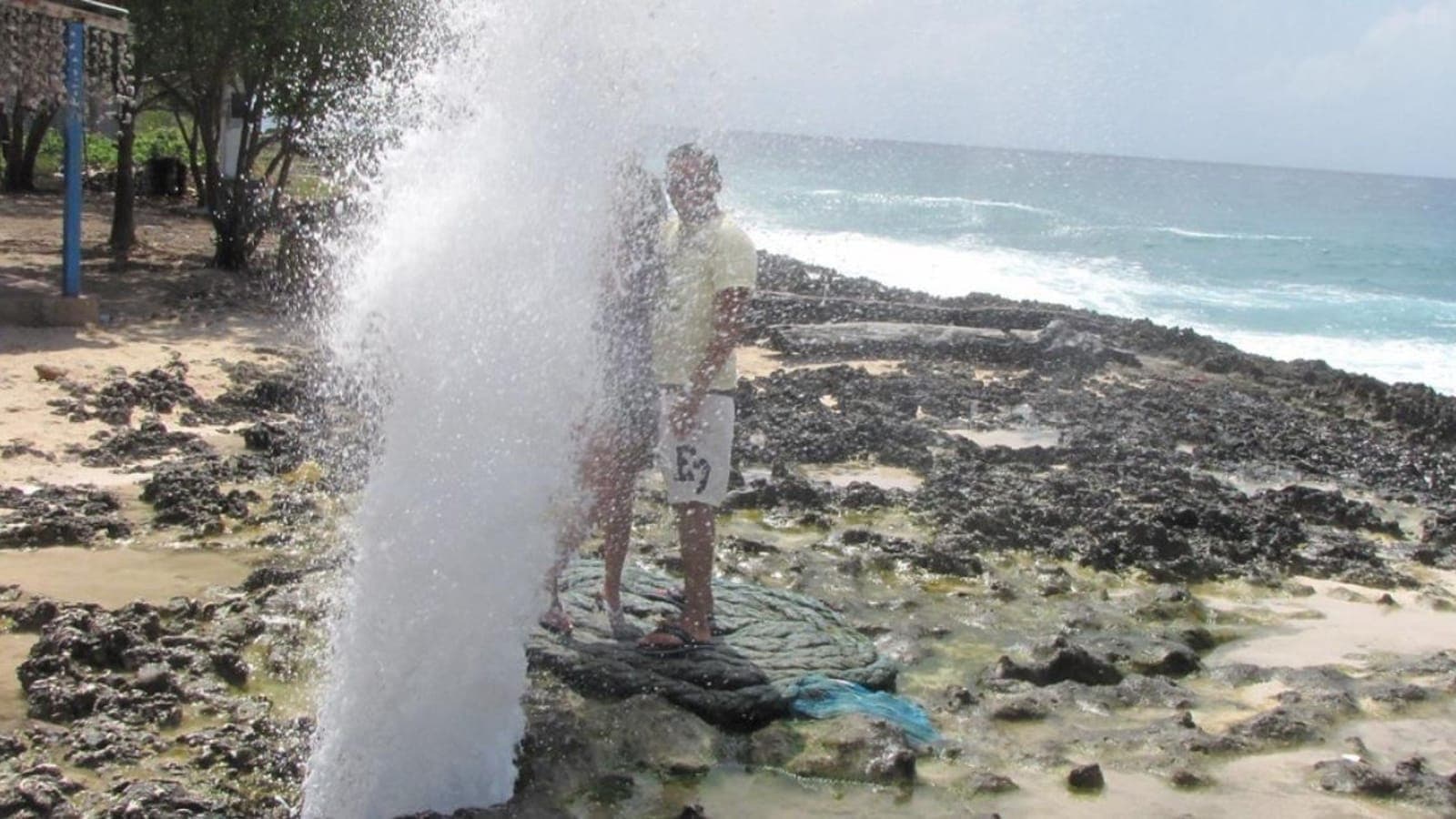
You’ll arrive at the famous Hoyo Soplador blowhole. Is it worth it? Let’s be honest. It’s a natural phenomenon where seawater rushes into underground tunnels in the coral and shoots upward like a geyser.
- The reality: It only “blows” at high tide with strong wind. If the sea is flat as a pancake, all you’ll see is a hole in the rock.
- The vibe: It’s a very touristy spot. They’ll offer you a “Coco Loco,” they’ll invite you into souvenir shops. If you don’t like being swarmed by vendors, hop out, take a quick look and keep going. If you like a bit of rowdy fun and want the iconic photo with your hair blown wild, this is the place.
Leg 3: the west side (West View and La Piscinita)
As you round the south end and start heading up the west side, get ready for a radical change. There are no sandy beaches here. The coast is sharp coral rock (“diente de perro,” or dog’s tooth, as we call it) and the sea is deep, a dark blue that’s intimidating but beautiful.
This is where driving in San Andrés becomes a treat for the eyes. You’ve got the rock wall on your right and the vast Caribbean Sea on your left. The sunset on this side of the island is a show that should charge admission, but it’s free.
The must-do stops here are for snorkeling:
- La Piscinita: A calm natural swimming spot, ideal if you’re traveling with kids or want to see fish without much effort. Toss in a little piece of bread and the water boils with colorful fish.
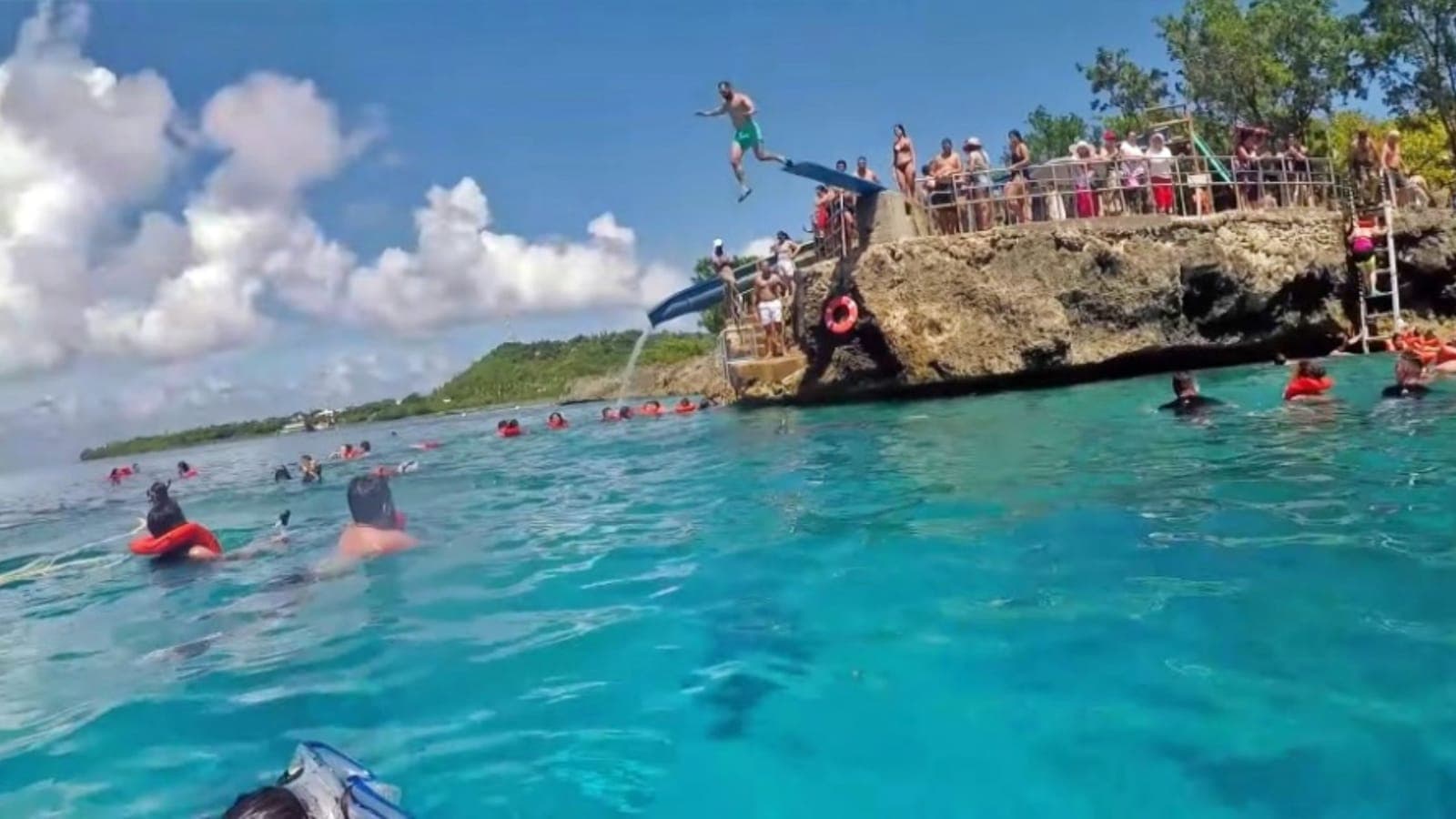
- West View: This one’s for the adventurous. It has a high diving board, a slide that drops straight into the sea and a scuba diving area. It’s busier, the music is loud and there’s a lot of energy. The water is so clear you can see the bottom several meters down.
Leg 4: Cueva de Morgan and the ride back
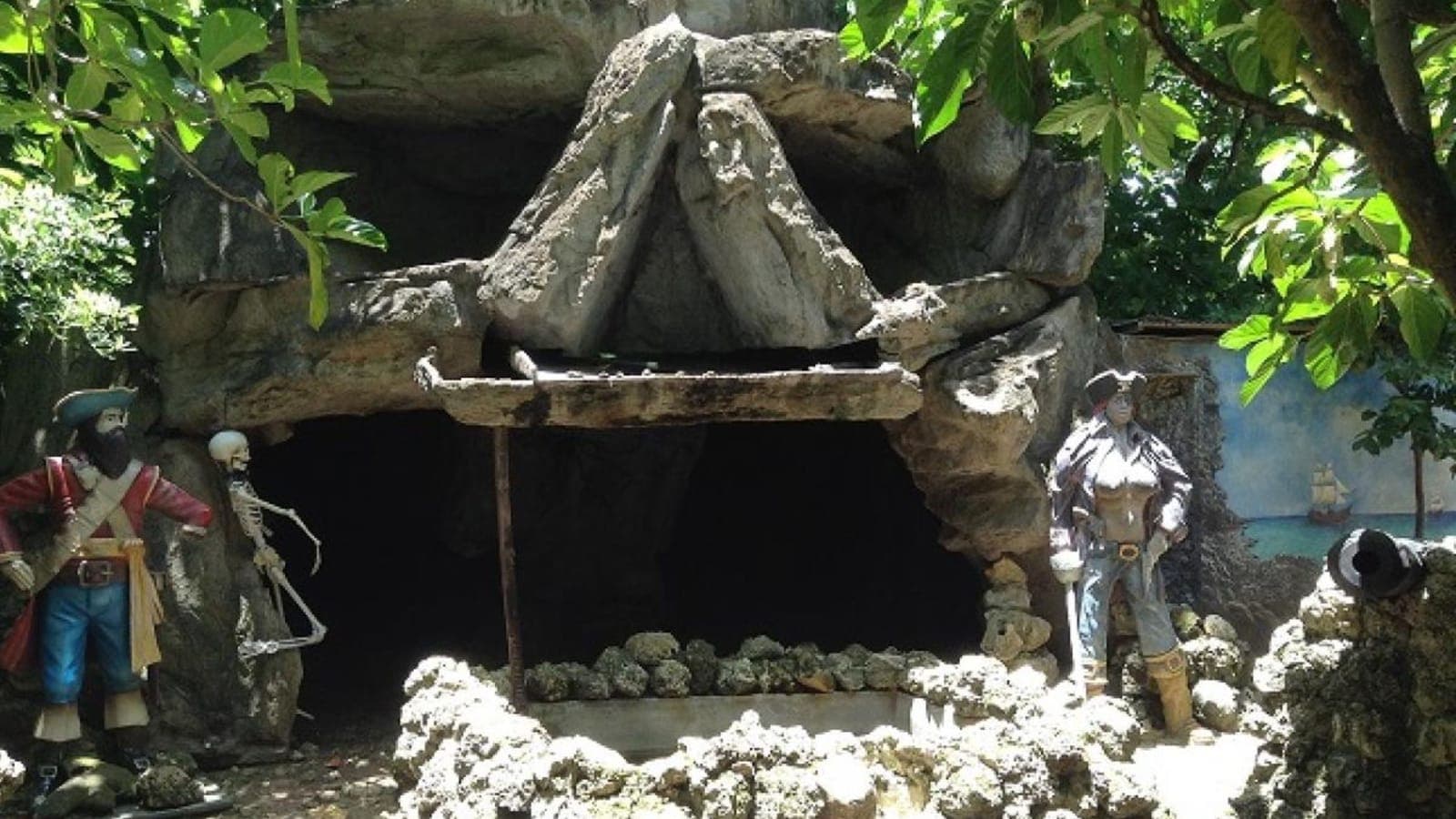
Heading back up toward downtown, you’ll come to Cueva de Morgan (Morgan’s Cave). Is it a tourist trap? A little. Is it fun? That too. It’s a themed complex where they tell you the legend of the pirate Henry Morgan, who supposedly hid his treasure there. The cave itself is small and dark, but the visit includes coconut museums and traditional dance shows. If you’re into culture and history, go in. If you just want sea and sand, you can skip it and nobody will judge you.
Survival guide: what nobody explains when you rent
Driving a Mulita isn’t rocket science, but it has its quirks. So your experience doesn’t go from “epic adventure” to “headache,” keep these practical tips in mind:
Inspect the vehicle like a mechanic would
Before you sign anything and drive off from the rental place, take out your phone.
- Photos and video: Record a full walk-around of the vehicle. Zoom in on every scratch, every dent in the bumper and the condition of the seats. This is your life insurance, so they don’t charge you for damage that was already there when you return it.
- Brakes and steering: Don’t pull out onto the road right away. Test the brakes around the block. Mules are heavy and don’t stop on a dime like a modern car. The steering usually has some “play” (it moves a little before it actually turns), so get used to that before you step on the gas.
The gas situation
Most companies hand you the Mulita with a little gas, and you have to return it the same way. Heads up: there isn’t a gas station on every corner of the island. Basically, there’s one big station downtown and another one heading south on the San Luis road. If you see the gauge dropping below half and you’re far from downtown, fill up. Getting stranded without gas on the south end of the island, where cell signal sometimes cuts out, is not the plan.
San Andrés traffic and the police
Downtown, traffic in San Andrés is chaotic. Motorbikes on your right, on your left, people walking in the street. Stay calm and go slow. On the ring road it’s more relaxed, but watch your speed. Even though the Mule isn’t fast, there are limits (30 km/h in residential areas).
Do I need a license? Yes, you must carry your valid driver’s license (national or international).
Alcohol: The police set up checkpoints. And they’re strict. If you had three “Cocos Locos” at the Hoyo Soplador, let someone else drive. The fines are steep and they impound the vehicle.
Safety: Don’t leave bags or phones in plain sight in the Mule if you head down to the beach. The island is safe, but opportunity makes the thief.
Exploria’s tip: the secret of La Loma
Here comes the golden nugget, the one that makes it worth having read this far.
Most people drive around the island only along the coast. Big mistake. The true soul of San Andrés is up top, in the hills. When you’re over on the San Luis side or coming up from the south, look for the turnoffs marked “La Loma” or “The Hill.”
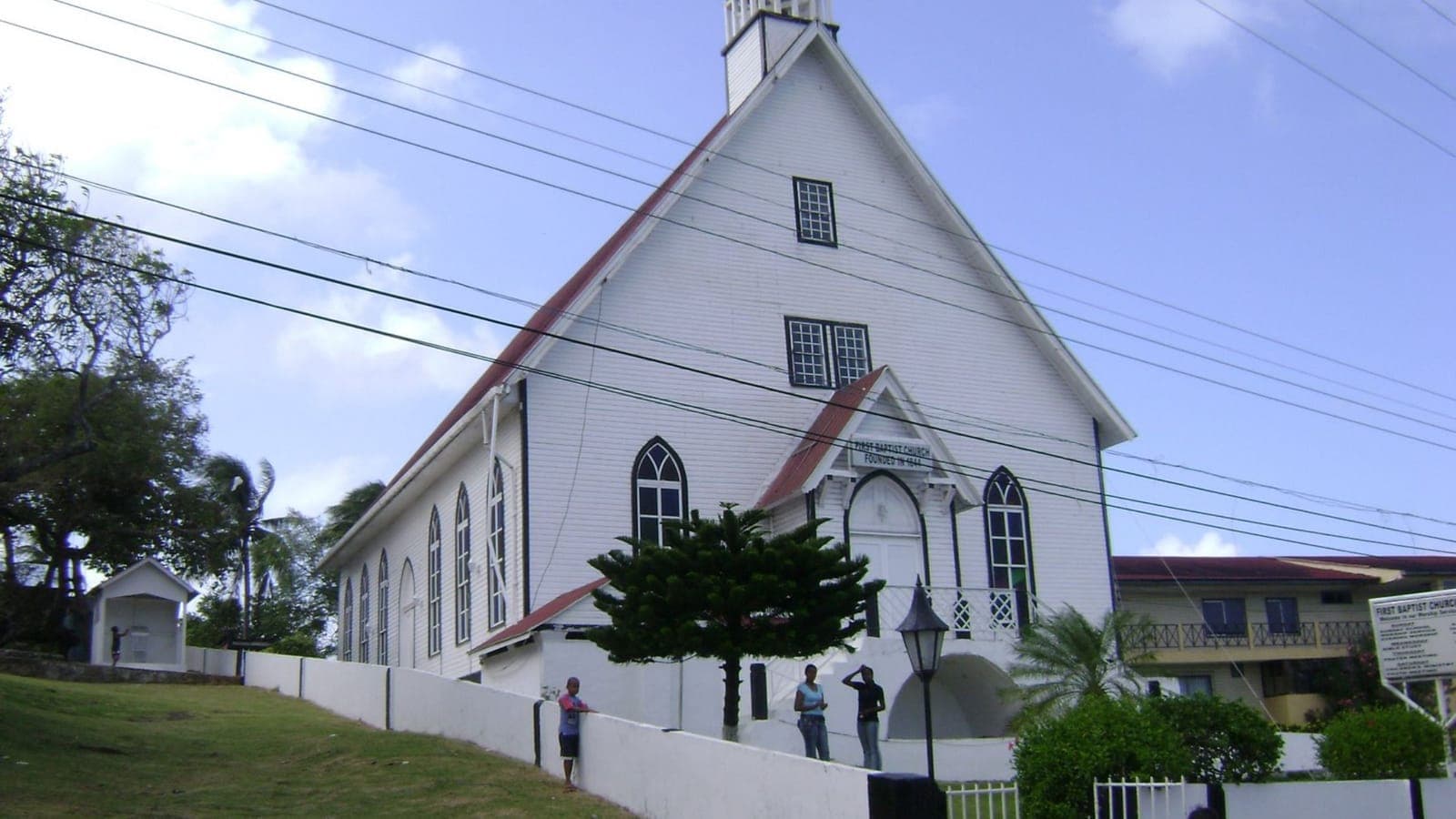
Drive your Mulita up (make sure it has enough power) to the First Baptist Church. It’s the highest point of the inhabited area. You can climb the church’s bell tower (they charge a token admission fee that helps with upkeep), and you’ll get, no exaggeration, the best panoramic view of the entire archipelago. You’ll see the seven colors of the sea from above, the green of the vegetation and the vastness of the horizon.
Plus, La Loma is where you feel the old San Andrés. You’ll see locals speaking Creole on their porches, horses grazing and a peace that doesn’t exist down at the beach. It’s a 30-minute detour that will change the way you see the island.
Ready to take the wheel?
Driving around the island in a Mule means disconnecting from the world to connect with the Caribbean. It’s ending the day with your hair tangled by the wind, salt on your skin and an ear-to-ear smile, knowing you got to know San Andrés your way.
But we get that not everyone wants to deal with the map, the gas or the downtown traffic. Sometimes you just want to sit back, have a cold beer and let someone else drive.
If that’s you, at Exploria we don’t just help you rent safe, verified mules; we also offer a Private Island Tour with Driver. A local expert (like me) will take you to these spots, and to others that don’t show up on Google, telling you the island’s stories while all you have to worry about is enjoying yourself.
Ready for the adventure? Book your Mulita or your private tour with us and experience San Andrés beyond the postcard.
Frequently asked questions
How much does it cost to rent a mulita in San Andrés?
It depends on how many of you are going (there are 2-seat, 3–4 seat and 5–6 seat mulitas) and on the plan: the daytime rental, from 9:00 AM to 6:00 PM, or the 24-hour plan, which lets you keep it until the same time the next day. Today’s price is on the mulita rental page. Online, you pay only a deposit, which is also the security deposit, and you pay the rest to the operator when you receive it.
Are the mulitas in San Andrés automatic?
The one Exploria rents is: it’s an inspected automatic mulita, with unlimited mileage and roadside assistance across the island.
What license do I need to drive a mulita?
The driver must be of legal age and show a physical, valid car driver’s license (category B1 or equivalent; a motorcycle-only license won’t do) along with their original ID. Without it, the mulita can’t be handed over.
How many people fit in a mulita?
Up to 6 per mulita, including children; babies can come too.
Where do you deliver the mulita?
At your accommodation, at 9:00 AM. Delivery is free in Centro, the airport area and Sarie Bay; for San Luis, La Loma or El Cove, there’s an extra logistics fee that you pay on site.
Is fuel included?
No. The mulita is handed over with a certain fuel level (usually between a quarter and half a tank) and is returned with the same level.
Can I drive the mulita onto the sand or the beach?
No, it’s forbidden: the mulita is for paved roads only. It gets stuck in the sand, and that leads to fines and towing charges that the customer pays.